Why Choose Us?
0% AI Guarantee
Human-written only.
24/7 Support
Anytime, anywhere.
Plagiarism Free
100% Original.
Expert Tutors
Masters & PhDs.
100% Confidential
Your privacy matters.
On-Time Delivery
Never miss a deadline.
1) Why is it assumed that dividends could grow in the future? Question 5 (5 marks) What are the major sources of funds for large corporations? Question 6 (5 marks) Why does a lower cost of capital serve as an incentive to invest more? Question 7 (5 marks) What is the decision rule of the IRR method? Question 8 (5 marks) What are the limitations of the payback period? 2)What is the present value of the following series of cash payments: $8,000 per year for four consecutive years starting one year from today, followed by annual cash payments that increase by 2% per year in perpetuity (i
1) Why is it assumed that dividends could grow in the future? Question 5 (5 marks) What are the major sources of funds for large corporations? Question 6 (5 marks) Why does a lower cost of capital serve as an incentive to invest more? Question 7 (5 marks) What is the decision rule of the IRR method? Question 8 (5 marks) What are the limitations of the payback period?
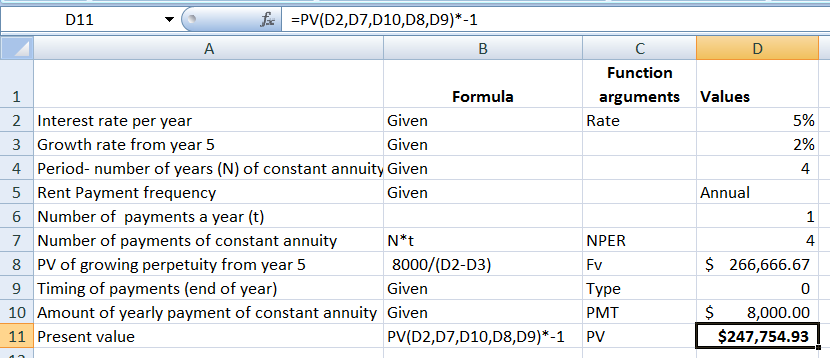
2)What is the present value of the following series of cash payments: $8,000 per year for four consecutive years starting one year from today, followed by annual cash payments that increase by 2% per year in perpetuity (i.e. cash payment in year 5 is $8,000*1.02, cash payment in year 6 is $8,000*1.022, etc.)? Assume the appropriate discount rate is 5%/year.
Expert Solution
1)
1. There are several reasons for growth in dividend. It could be because of time value i.e. if x is paid now won't be equal to x paid 10 years later.
Second because we generally expect increase in profit of company as dividend hike is positive indicator of company's performance. etc
2. The main source for raising funds for a company is retained earning, debt capital and equity capital. Retained earnings are the profits that kept aside by company for future use in growth and expansion strategies. Companies raise debt privately by bank and publically by issuing debt securities. Companies obtain equity by giving ownership rights in exchange of funds.
3. If your cost of capital is low then you have to pay less on borrowed fund that means your profits will increase more from your invesment. As profit is difference between what you will receive and what you have to pay. So if cost of capital is low company will be more encourages to invest more.
4. Decision rule in IRR Method is your IRR should be greater than cost of capital. If you will equate present value of all future cashflows to zero then you will get IRR. Your decision rule is based on criteria that your return on investment should be more than the cost you have to pay on borrowed fund.
5. Limitation of pay back period is it doesn't involves time value of money because of that it gives higher weightage to cashflows receives in early years than cashflows receives in later years. It doesn't take into consideration the cashflows occuring after break even.
2)
Present value of series of cash payments: $8,000 per year for four consecutive years starting one year from today, followed by annual cash payments that increase by 2% per year in perpetuity= $247,754.93
Details of calculation as below:
please see the attached file.
Archived Solution
You have full access to this solution. To save a copy with all formatting and attachments, use the button below.
For ready-to-submit work, please order a fresh solution below.