Why Choose Us?
0% AI Guarantee
Human-written only.
24/7 Support
Anytime, anywhere.
Plagiarism Free
100% Original.
Expert Tutors
Masters & PhDs.
100% Confidential
Your privacy matters.
On-Time Delivery
Never miss a deadline.
Question #3: DVD Movie Central, a firm in a perfectly competitive market, produces DVD movies for sale, which requires a building and a machine that copies the original movie onto a DVD
Question #3: DVD Movie Central, a firm in a perfectly competitive market, produces DVD movies for sale, which requires a building and a machine that copies the original movie onto a DVD. The company rents a building for $30,000 per month. It also rents a DVD copy machine for $20,000 a month. Both of these costs do not change with the DVD production. However, the company also incurs costs for using electricity or for hiring more workers as DVD production increases. The company's total variable cost per month is given in the accompanying table: Quantity of DVDS VC 0 0 1,000 5,000 2,000 8,000 3,000 9,000 4,000 14,000 5,000 20,000 6,000 33,000 7,000 49,000 8,000 72,000 9,000 99,000 10,000 150,000 # Calculate DVD Movie Central's average total cost, average variable cost, and marginal cost for each quantity of output. b. Suppose that currently the market price of a DVD is $25. Identify the profit maximizing or loss minimizing quantity for DVD Movie Central Calculate the total loss or profit for DVD Movie Central. Is this a long- run equilibrium? Why? Why not? What happens to the price of DVD movies in the long run? Explain e Suppose that currently the market price of a DVD is $13. Identify the profit maximizing or loss minimizing quantity for DVD Movie Central. Calculate the total loss or profit for DVD Movie Central. Is this a long- nun equilibrium? Why? Why not? What happens to the price of DVD movies in the long run? Explain. d Suppose that currently the market price of a DVD is $10. Identify the profit maximizing or loss minimizing quantity for DVD Movie Central Calculate the total loss or profit for DVD Movie Central. Is this a long- run equilibrium? Why? Why not? What happens to the price of DVD movies in the long run? Explain What is DVD Movie Central's break-even price? What is its shut-down price? Draw DVD Movic Central's following cost and revenue curves: marginal cost, average total cost, average variable cost, marginal revenue and average revenue. In the graph, identity DVD Movie Central's individual supply curve
Expert Solution
a) Average variable cost = Variable cost / Output
Average Total cost = Total cost / Output
Fixed cost = Rent + Copy machine = 30,000 + 20,000 = 50,000
Marginal Cost is Change in Quantity of DVDs / Change in Total Cost
| Quantity of DVDs | Variable cost | Fixed Cost | Total cost | Average total cost | Average variable cost | Average Fixed cost | Marginal cost |
| - | - | 50,000 | 50,000 | - | - | - | - |
| 1,000 | 5,000 | 50,000 | 55,000 | 55.00 | 5.00 | 50.00 | 5 |
| 2,000 | 8,000 | 50,000 | 58,000 | 29.00 | 4.00 | 25.00 | 3 |
| 3,000 | 9,000 | 50,000 | 59,000 | 19.67 | 3.00 | 16.67 | 1 |
| 4,000 | 14,000 | 50,000 | 64,000 | 16.00 | 3.50 | 12.50 | 5 |
| 5,000 | 20,000 | 50,000 | 70,000 | 14.00 | 4.00 | 10.00 | 6 |
| 6,000 | 33,000 | 50,000 | 83,000 | 13.83 | 5.50 | 8.33 | 13 |
| 7,000 | 49,000 | 50,000 | 99,000 | 14.14 | 7.00 | 7.14 | 16 |
| 8,000 | 72,000 | 50,000 | 122,000 | 15.25 | 9.00 | 6.25 | 23 |
| 9,000 | 99,000 | 50,000 | 149,000 | 16.56 | 11.00 | 5.56 | 27 |
| 10,000 | 150,000 | 50,000 | 200,000 | 20.00 | 15.00 | 5.00 | 51 |
b)
| Quantity of DVDs | Variable cost | Fixed Cost | Total cost | Average total cost | Average variable cost | Average Fixed cost | Marginal cost | Total revenue from price = 25 | Marginal revenue | Profit |
| - | - | 50,000 | 50,000 | - | - | - | - | - | - 50,000 | |
| 1,000 | 5,000 | 50,000 | 55,000 | 55.00 | 5.00 | 50.00 | 5 | 25,000 | 25 | - 30,000 |
| 2,000 | 8,000 | 50,000 | 58,000 | 29.00 | 4.00 | 25.00 | 3 | 50,000 | 25 | - 8,000 |
| 3,000 | 9,000 | 50,000 | 59,000 | 19.67 | 3.00 | 16.67 | 1 | 75,000 | 25 | 16,000 |
| 4,000 | 14,000 | 50,000 | 64,000 | 16.00 | 3.50 | 12.50 | 5 | 100,000 | 25 | 36,000 |
| 5,000 | 20,000 | 50,000 | 70,000 | 14.00 | 4.00 | 10.00 | 6 | 125,000 | 25 | 55,000 |
| 6,000 | 33,000 | 50,000 | 83,000 | 13.83 | 5.50 | 8.33 | 13 | 150,000 | 25 | 67,000 |
| 7,000 | 49,000 | 50,000 | 99,000 | 14.14 | 7.00 | 7.14 | 16 | 175,000 | 25 | 76,000 |
| 8,000 | 72,000 | 50,000 | 122,000 | 15.25 | 9.00 | 6.25 | 23 | 200,000 | 25 | 78,000 |
| 9,000 | 99,000 | 50,000 | 149,000 | 16.56 | 11.00 | 5.56 | 27 | 225,000 | 25 | 76,000 |
| 10,000 | 150,000 | 50,000 | 200,000 | 20.00 | 15.00 | 5.00 | 51 | 250,000 | 25 | 50,000 |
Profit is maximized at output level of 8,000.
This is not a long run equilibrium because firm earn 0 profit in long run. Price will decline in long run because new producers will enter in the market in hope of earning profit which drive down profit for everyone.
c)
| Quantity of DVDs | Variable cost | Fixed Cost | Total cost | Average total cost | Average variable cost | Average Fixed cost | Marginal cost | Total revenue from price = 13 | Marginal revenue | Profit |
| - | - | 50,000 | 50,000 | - | - | - | - | - | - 50,000 | |
| 1,000 | 5,000 | 50,000 | 55,000 | 55.00 | 5.00 | 50.00 | 5 | 13,000 | 13 | - 42,000 |
| 2,000 | 8,000 | 50,000 | 58,000 | 29.00 | 4.00 | 25.00 | 3 | 26,000 | 13 | - 32,000 |
| 3,000 | 9,000 | 50,000 | 59,000 | 19.67 | 3.00 | 16.67 | 1 | 39,000 | 13 | - 20,000 |
| 4,000 | 14,000 | 50,000 | 64,000 | 16.00 | 3.50 | 12.50 | 5 | 52,000 | 13 | - 12,000 |
| 5,000 | 20,000 | 50,000 | 70,000 | 14.00 | 4.00 | 10.00 | 6 | 65,000 | 13 | - 5,000 |
| 6,000 | 33,000 | 50,000 | 83,000 | 13.83 | 5.50 | 8.33 | 13 | 78,000 | 13 | - 5,000 |
| 7,000 | 49,000 | 50,000 | 99,000 | 14.14 | 7.00 | 7.14 | 16 | 91,000 | 13 | - 8,000 |
| 8,000 | 72,000 | 50,000 | 122,000 | 15.25 | 9.00 | 6.25 | 23 | 104,000 | 13 | - 18,000 |
| 9,000 | 99,000 | 50,000 | 149,000 | 16.56 | 11.00 | 5.56 | 27 | 117,000 | 13 | - 32,000 |
| 10,000 | 150,000 | 50,000 | 200,000 | 20.00 | 15.00 | 5.00 | 51 | 130,000 | 13 | - 70,000 |
Loss is minimized at output level of 5,000 and 6,000 units but producer will prefer producing 6,000 units.
This is not a long run equilibrium because firm earn 0 profit in long run. Price will rise in long run because some producers will leave the market due to their higher fixed cost and loss they make in short run.
d)
| Quantity of DVDs | Variable cost | Fixed Cost | Total cost | Average total cost | Average variable cost | Average Fixed cost | Marginal cost | Total revenue from price = 10 | Marginal revenue | Profit |
| - | - | 50,000 | 50,000 | - | - | - | - | - | - 50,000 | |
| 1,000 | 5,000 | 50,000 | 55,000 | 55.00 | 5.00 | 50.00 | 5 | 10,000 | 10 | - 45,000 |
| 2,000 | 8,000 | 50,000 | 58,000 | 29.00 | 4.00 | 25.00 | 3 | 20,000 | 10 | - 38,000 |
| 3,000 | 9,000 | 50,000 | 59,000 | 19.67 | 3.00 | 16.67 | 1 | 30,000 | 10 | - 29,000 |
| 4,000 | 14,000 | 50,000 | 64,000 | 16.00 | 3.50 | 12.50 | 5 | 40,000 | 10 | - 24,000 |
| 5,000 | 20,000 | 50,000 | 70,000 | 14.00 | 4.00 | 10.00 | 6 | 50,000 | 10 | - 20,000 |
| 6,000 | 33,000 | 50,000 | 83,000 | 13.83 | 5.50 | 8.33 | 13 | 60,000 | 10 | - 23,000 |
| 7,000 | 49,000 | 50,000 | 99,000 | 14.14 | 7.00 | 7.14 | 16 | 70,000 | 10 | - 29,000 |
| 8,000 | 72,000 | 50,000 | 122,000 | 15.25 | 9.00 | 6.25 | 23 | 80,000 | 10 | - 42,000 |
| 9,000 | 99,000 | 50,000 | 149,000 | 16.56 | 11.00 | 5.56 | 27 | 90,000 | 10 | - 59,000 |
| 10,000 | 150,000 | 50,000 | 200,000 | 20.00 | 15.00 | 5.00 | 51 | 100,000 | 10 | - 100,000 |
Loss is minimized at output level of 5,000 units.
This is not a long run equilibrium because firm earn 0 profit in long run. Price will rise in long run because some producers will leave the market due to higher fixed cost and loss they make in short run.
e) Break even occurs when total revenue = total cost
| Quantity of DVDs | Variable cost | Fixed Cost | Total cost | Average total cost | Average variable cost | Average Fixed cost | Marginal cost | Total revenue from price = 14 | Marginal revenue | Profit |
| - | - | 50,000 | 50,000 | - | - | - | - | - | - 50,000 | |
| 1,000 | 5,000 | 50,000 | 55,000 | 55.00 | 5.00 | 50.00 | 5 | 14,000 | 14 | - 41,000 |
| 2,000 | 8,000 | 50,000 | 58,000 | 29.00 | 4.00 | 25.00 | 3 | 28,000 | 14 | - 30,000 |
| 3,000 | 9,000 | 50,000 | 59,000 | 19.67 | 3.00 | 16.67 | 1 | 42,000 | 14 | - 17,000 |
| 4,000 | 14,000 | 50,000 | 64,000 | 16.00 | 3.50 | 12.50 | 5 | 56,000 | 14 | - 8,000 |
| 5,000 | 20,000 | 50,000 | 70,000 | 14.00 | 4.00 | 10.00 | 6 | 70,000 | 14 | - |
| 6,000 | 33,000 | 50,000 | 83,000 | 13.83 | 5.50 | 8.33 | 13 | 84,000 | 14 | 1,000 |
| 7,000 | 49,000 | 50,000 | 99,000 | 14.14 | 7.00 | 7.14 | 16 | 98,000 | 14 | - 1,000 |
| 8,000 | 72,000 | 50,000 | 122,000 | 15.25 | 9.00 | 6.25 | 23 | 112,000 | 14 | - 10,000 |
| 9,000 | 99,000 | 50,000 | 149,000 | 16.56 | 11.00 | 5.56 | 27 | 126,000 | 14 | - 23,000 |
| 10,000 | 150,000 | 50,000 | 200,000 | 20.00 | 15.00 | 5.00 | 51 | 140,000 | 14 | - 60,000 |
At a price of 14 (break even price), total revenue = total cost at output level of 5,000.
Shut down price occurs when price is equal to minimum of average variable cost that is $3 which occur at output level of 3,000.
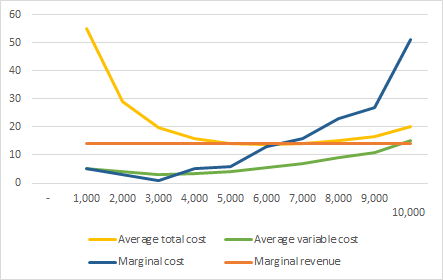
f) When price = 14
Individual supply curve is the part of marginal cost above average variable cost curve.
please see the attached file.
Archived Solution
You have full access to this solution. To save a copy with all formatting and attachments, use the button below.
For ready-to-submit work, please order a fresh solution below.